EXHIBITIONS
ART FAIR TOKYO 2026
13 March (Fri) - 15 March (Sun)

 SEARCH
EXHIBITIONS
13 March (Fri) - 15 March (Sun)
NUKAGA GALLERYは、アートフェア東京2026に出展いたします。
弊廊からは、桂ゆき、荒木高子、芥川(間所)紗織、三島喜美代、フランク・ステラによる作品を展示します。
1960年前後、世界の中心となったニューヨークのアートシーンは熱狂的な野心と古い価値観への反逆に満ちていました。 それまでの抽象表現主義からポップアート、ミニマリズムへの転換期です。 今回ご紹介する5人のアーティストもそのような非常にエキサイティングな磁場に引き寄せられ、生のアートの熱気や多様な価値観が渦巻く現場を求めてニューヨークへ向かいました。
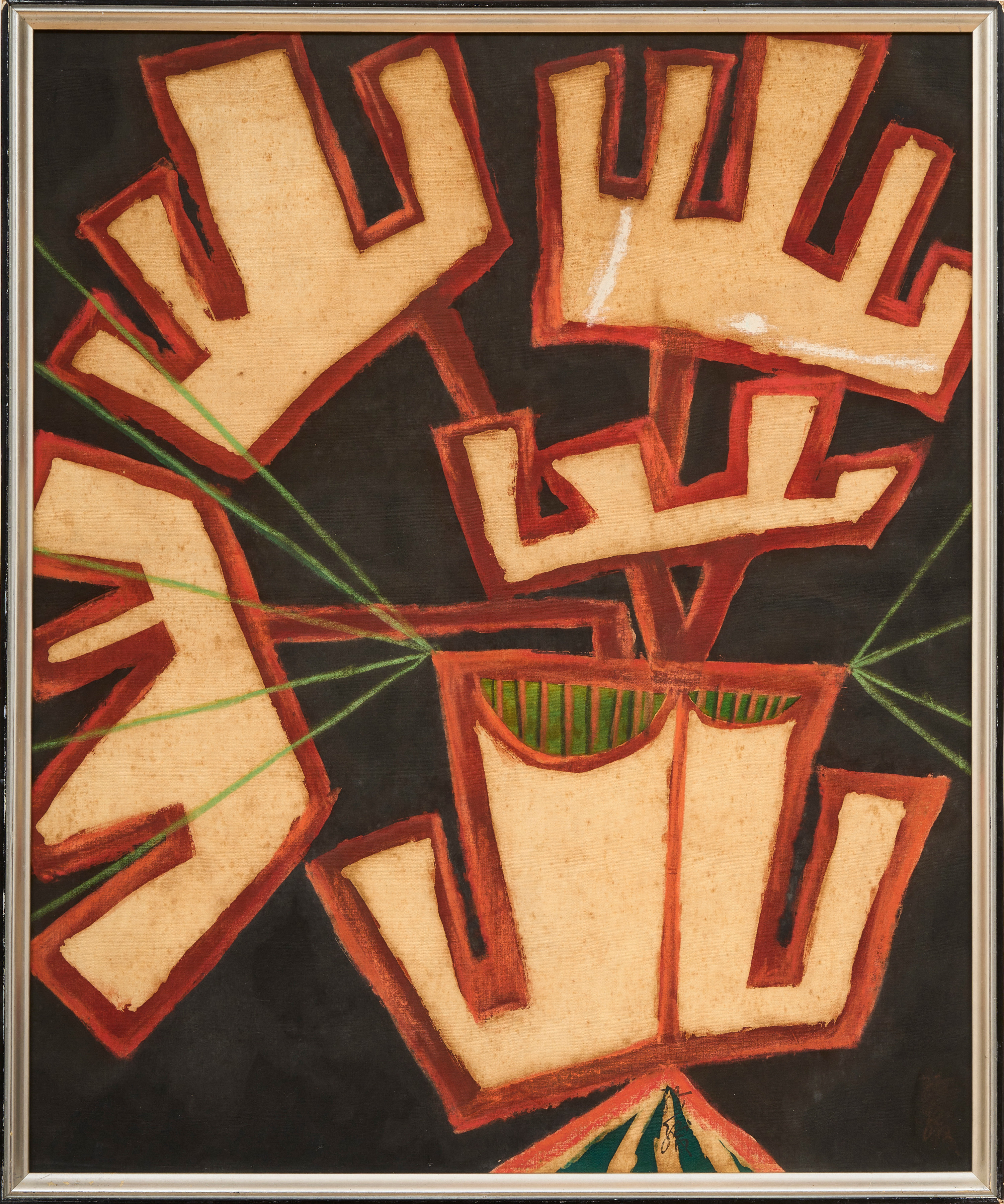
桂ゆきは1913年生まれ。日本で最初の前衛芸術の会である二科九室会の創立に女性で唯一参加した作家です。1930年代には細密描写やコルクを用いたコラージュ、戯画的表現を展開し、漫画的手法によって世相を風刺するブラックユーモアに満ちた油彩を制作しました。1956年に渡仏すると、58年にはアフリカへ、その後アメリカへ渡ります。ニューヨークではミニマル・アートを中心とした抽象絵画に共鳴し、もともと彼女に備わっていた平面的な構成志向はここで研ぎ澄まされ、具体的なイメージは次第に払拭されていき、抽象的な構成へと到達しました。 ニューヨーク滞在中は、キャンバスに和紙を貼り重ねるコラージュによって、触覚性や有機的感覚を保ち続け、多くの抽象作品を制作しています。1960年にはワシントンのグレス・ギャラリーでの「アブストラクト・ジャパニーズ・アート」展や、ニューヨークのリバーサイド美術館での「日米女流交歓展」に草間彌生らと並んで参加し、日本人女性作家の先駆者として国際舞台に鮮烈な存在感を示しました。 1961年4月30日の帰国後には、抽象的形態の中から足などの具体的モチーフが再び現れはじめ、《千本足》に見られるように生命的なイメージへと回帰します。こうして桂ゆきの表現は、抽象と具象、触覚性と平面性という相反する要素を統合しながら、独自の造形世界へと昇華していきました。
当時のニューヨークのアートシーンにエネルギーを供給した心臓部の一つとしてArt Students League of New York(ASL)が挙げられます。伝統的な技術を学べる場所でありながら、そこから飛び出して新しい運動(ポップアートやミニマリズム)を起こすための実験室のような役割を果たし、既存のアカデミーの枠に収まらない、野心的な若い才能が「とりあえず集まる場所」でした。荒木高子や芥川紗織もまた人種や階級、ジェンダーを問わない開かれた精神をもつASLに飛び込んだアーティストです。後年、フランク・ステラもこのASLにて対談形式の講義を行うなど、後進の育成に関わりました。
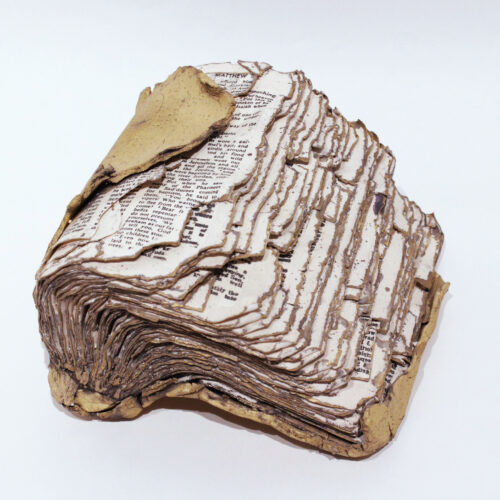
荒木高子は1921年生まれ。1950年代からガラス・オブジェの制作を始め、61年に渡米、ASLで彫刻を学びます。こうした環境に触れたことが、その後の構成的な立体表現へと展開していく背景の一つになったとみられます。1962年に帰国後は表現の中心を陶へと移し、本格的な制作を開始します。黒陶による円筒状の造形やチューブを切断したような形態は、素材の物質性を強く意識した構成的な立体として注目を集めました。さらに宗教と人間の存在を主題とした「聖書」シリーズでは、書物の形態を象徴的な彫刻として提示し、信仰、記憶、時間といった根源的なテーマを静謐な造形へと昇華させています。こうした作品は、陶を器としてではなく精神的彫刻として扱う独自の領域を切り開くものであり、アメリカ滞在で得た立体造形への視座を背景に、国内外で高い評価を受けました。
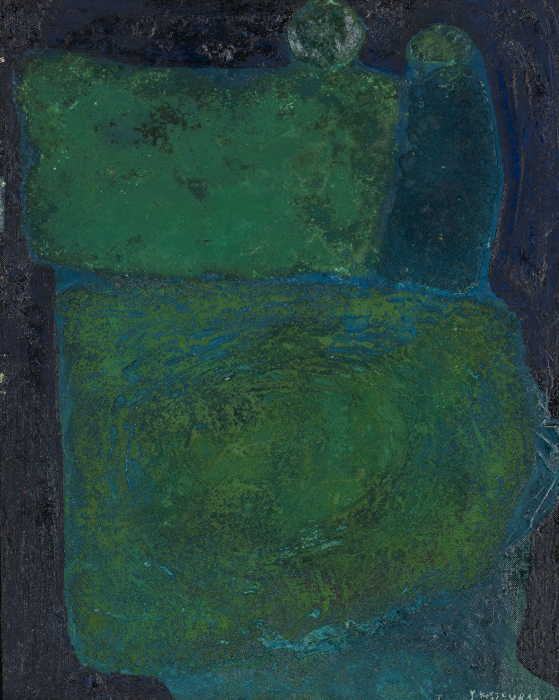
芥川(間所)紗織は1924年生まれ。1950年頃からほぼ独学で染色や油彩を始め、「女」や「神話・民話」シリーズなど大胆でユニークな表現が注目を集めました。1959年に渡米、ロサンゼルスでデザインを学んだ後、1961年よりASLでデッサンや油彩を学びます。渡米後の彼女の抽象画は、限定的な色彩とフォルムの組み合わせにより、一見すると当時全盛だったミニマリズムの影響を受けたように見えますが、そこには有機的なフォルムや確かな筆跡が息づいています。予めキャンバスに蝋を無造作に垂らしてマチエールを作り、その上から油彩で彩色した画面からは、時代の流行に迎合せず独自の表現を追求していった芥川の姿勢が窺えます。1962年に帰国、1966年にわずか41歳で早世しました。近年、国内外の美術研究者から非常に注目されているアーティストです。
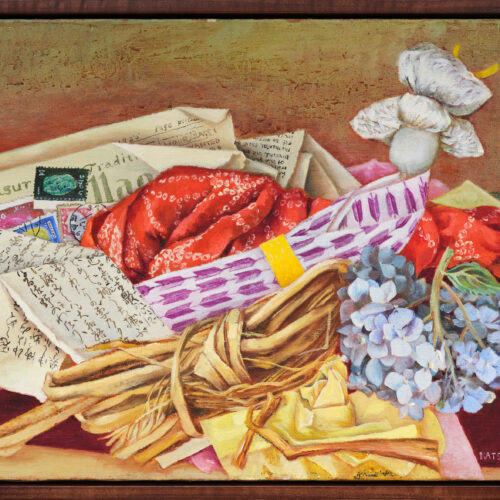
1932年生まれの三島喜美代は、具体美術協会の影響を受けた画家・三島茂司に絵画を学び、1960年代初頭より新聞紙や雑誌の切り抜きを用いたコラージュ作品の制作を開始。印刷物にあふれる現代社会の視覚環境に強い関心を寄せ、情報が氾濫し、瞬時に消費されていく時代のあり方を早くから意識していました。1970年代に入ると、脆く、日常の中で使い捨てられていく紙の情報を、半永久的に残る陶という素材に置き換えることで、現代文明の記憶のあり方や情報の「化石化」を問いかける独自の表現を確立し、情報化社会への鋭い批評性が高く評価されました。1986年にはロックフェラー財団の助成によりニューヨークに滞在し、急速に進むメディア社会と都市の大量消費の現実を体感します。この経験を契機に、1980年代以降は表現がさらにスケールを拡大し、原寸大の電柱やゴミ箱、瓦礫などを陶で再現した大型作品へと展開していきました。
フランク・ステラは1936年生まれ。1960年代の「熱い抽象」から「ミニマリズム」への転換点における先駆者としてアートシーンに現れた存在と言えます。マサチューセッツ州アンドーバーのフィリップス・アカデミーで絵画制作を始め、プリンストン大学に進学、絵画制作を続けながら歴史学を専攻しました。卒業後ニューヨークに移住、1950年代末にはブラック・ペインティングによって早くも注目を集めました。彼は抽象表現主義の感情的・ジェスチャー的な絵画に対して距離を取り、絵画を物理的・構造的な対象として捉える姿勢を明確にし、ミニマル・アートの先駆的存在として位置づけられています。 1960年代後半に展開されたプロトラクター・シリーズは、彼の作風の大きな転換点となりました。本作に関係する「シンジェリ」とは、紀元前14世紀に最盛期を迎えたヒッタイト帝国の古代都市の名称であり、二重の城壁に囲まれた円形の要塞構造を特徴としていました。この幾何学的な構造が、ステラの円弧や分割による画面構成の着想源となったと考えられています。作品に見られる色彩は、感覚的な表現というよりも、厳密な計算に基づくカラー・バリエーションとして配置されており、画家の論理的な思考過程を視覚化するものとなっています。このようにステラは、絵画を「何かを描くもの」ではなく、「構造と色彩の関係そのものを提示する場」として再定義し、戦後抽象絵画の展開に決定的な影響を与えた画家といえるでしょう。
それぞれのバックグラウンドを脱ぎ捨て、一人の表現者としてアートと向き合える場所に向かったアーティストたちの多様な表現をぜひご高覧ください。
ブースS019で皆さまのご来場をお待ちしております。
★詳しくは、アートフェア東京2026公式ホームページをご覧ください。
NUKAGA GALLERY is pleased to announce our participation in Art Fair Tokyo 2026.
The gallery will exhibit works by Yuki Katsura, Takako Araki, Saori Akutagawa (Madokoro), Kimiyo Mishima, and Frank Stella.
Around 1960, the New York art scene, having emerged as the global epicenter, was filled with fervent ambition and rebellion against old values. It was a transitional period from Abstract Expressionism to Pop Art and Minimalism. The five artists introduced here were also drawn to this exciting magnetic pull, heading to New York in search of an environment swirling with the raw energy of art and diverse values.
Yuki Katsura was born in 1913. She was the only female founding member of the Kyushitsu-kai of the Nika Association, Japan’s first avant-garde art group. In the 1930s, she developed meticulous depictions, collages using cork, and caricature-like expressions, producing oil paintings full of black humor that satirized social conditions through cartoonish methods.
After traveling to France in 1956, she went to Africa in 1958, and then to the United States. In New York, she resonated deeply with abstract painting, particularly Minimal Art. Her inherent inclination toward flat, two-dimensional composition was honed there; specific images were gradually stripped away, leading her to pure abstract composition. During her stay in New York, she produced many abstract works by layering washi (Japanese paper) on canvas, maintaining a sense of tactility and organic warmth. In 1960, she participated in the ‘Abstract Japanese Art exhibition’ at the Gres Gallery in Washington and the ‘Japanese-American Women Artists Exchange Exhibition’ at the Riverside Museum in New York alongside Yayoi Kusama, establishing a striking presence on the international stage as a pioneer among Japanese female artists. After returning to Japan on April 30, 1961, concrete motifs—such as legs—began to reappear from within her abstract forms, marking a return to vital imagery as seen in works like “Millipede( Senbon-ashi)”. Ultimately, Katsura’s artistic practice was elevated into a unique world of form, integrating the conflicting elements of abstraction and figuration, as well as tactility and flatness.
One of the beating hearts supplying energy to the New York art scene at the time was the Art Students League of New York(ASL). While it was a place to learn traditional techniques, it also functioned as a laboratory for breaking boundaries and launching new movements (such as Pop Art and Minimalism). It served as a default hub where ambitious young talents who did not fit into existing academic frameworks would “naturally gather”. Takako Araki and Saori Akutagawa were among the artists who immersed themselves in ASL, an institution defined by its open spirit, welcoming individuals regardless of race, class, or gender. In later years, Frank Stella also contributed to nurturing the next generation by giving dialogue-based lectures at ASL.
Takako Araki was born in 1921. She began creating glass objects in the 1950s, moved to the US in 1961, and studied sculpture at ASL. Exposure to this environment is considered a key formative influence that led to her subsequent development into structural, three-dimensional expression. After returning to Japan in 1962, she shifted her artistic focus to ceramics and began full-scale production. Her cylindrical forms made of black pottery and shapes resembling cut tubes attracted attention as structural three-dimensional works highly conscious of the material’s physicality. Furthermore, in her Bible series, which explored themes of religion and human existence, she presented the form of books as symbolic sculptures, distilling fundamental themes such as faith, memory, and time into tranquil forms. These works opened up a unique domain that treated ceramics not as vessels but as spiritual sculptures. Informed by the perspective on three-dimensional form she gained during her stay in America, her practice received high acclaim both domestically and internationally.
Saori Akutagawa(Madokoro) was born in 1924. Around 1950, she began working with dyeing and oil painting, largely self-taught, and her bold and unique works, such as her “Women” and “Myth and Folktale” series, attracted significant attention. She moved to the US in 1959, studied design in Los Angeles, and then studied drawing and oil painting at ASL from 1961. While her abstract paintings after moving to the US, with their limited color palettes and combinations of forms, may initially appear to be influenced by the Minimalism that was prevalent at the time, they pulse with organic forms and distinct brushstrokes. From the canvases where she spontaneously dripped wax to create a rich matière(texture) before applying oil paint, one can glimpse Akutagawa’s uncompromising dedication to her own artistic vision, refusing to pander to contemporary trends. She returned to Japan in 1962 and passed away prematurely in 1966 at the young age of 41. In recent years, she has been garnering significant attention from art scholars domestically and internationally.
Kimiyo Mishima, born in 1932, studied painting under Shigeji Mishima, a painter influenced by the Gutai Art Association, and began creating collage works using newspaper and magazine clippings in the early 1960s. She took a strong interest in the visual environment of modern society, which is overflowing with printed matter, and became conscious early on of the nature of an era defined by the deluge and instant consumption of information. In the 1970s, she established a distinctive practice by replacing the fragile, everyday printed matter that is typically discarded with ceramics, a material that remains semi-permanently. This approach questioned the nature of memory in modern civilization and the “fossilization” of information, earning her high praise for her sharp critique of the information society. In 1986, supported by a Rockefeller Foundation grant, she stayed in New York and experienced firsthand the reality of a rapidly advancing media society and urban mass consumption. Serving as a catalyst, this experience prompted the scale of her work to expand from the 1980s onward, developing into large-scale pieces that reproduced life-sized utility poles, trash bins, and rubble in ceramics.
Frank Stella was born in 1936. He emerged on the art scene as a pioneering figure at the turning point from the “hot abstraction” of the 1960s to Minimalism. He began painting at Phillips Academy in Andover, Massachusetts, and went on to study at Princeton University, where he continued painting while majoring in history. Upon graduating in 1958, he moved to New York after graduation, and quickly garnered attention in the late 1950s with his “Black Paintings”. He distanced himself from the emotional and gestural approach of Abstract Expressionism, clarifying his stance of treating painting as a physical and structural object, and established himself as a pioneer of Minimal Art.
The “Protractor Series”, developed in the late 1960s, marked a major turning point in his style. “Sinjerli”, the title of the related work, refers to an ancient city of the Hittite Empire that reached its peak in the 14th century BC, characterized by a circular fortress structure surrounded by double walls. This geometric structure is thought to have been the source of inspiration for Stella’s canvas compositions based on arcs and divisions. The colors seen in the work are arranged not as sensory expressions, but as color variations based on strict calculation, visualizing the painter’s logical thought process. In this way, Stella redefined painting not as “something that depicts something else,” but as “a site presenting the relationship between structure and color itself,” making him a painter who exerted a decisive influence on the development of postwar abstract painting.
Please come and experience the diverse expressions of these artists, each of whom has shed their background to face their art simply as a creator.
We look forward to seeing you at booth S019.
★More Information ⇒ http://artfairtokyo.com/
VIP First Choice (招待制)
3月12日(木) 11:00-19:00
VIP(招待制)
3月12日(木) 13:00-19:00
一般公開
3月13日(金) 11:00-19:00
3月14日(土) 11:00-19:00
3月15日(日) 11:00-17:00
*最終入場は各日終了30分前まで。
VIP First Choice (Invitation only)
12 March (Thu) 11:00-19:00
VIP (Invitation only)
12 March (Thu) 13:00-19:00
Public day
13 March (Fri) 11:00-19:00
14 March (Sat) 11:00-19:00
15 March (Sun) 11:00-17:00
S019
S019
桂ゆき、荒木高子、芥川(間所)紗織、三島喜美代、フランク・ステラ
Yuki Katsura, Takako Araki, Saori Akutagawa(Madokoro), Kimiyo Mishima, Frank Stella
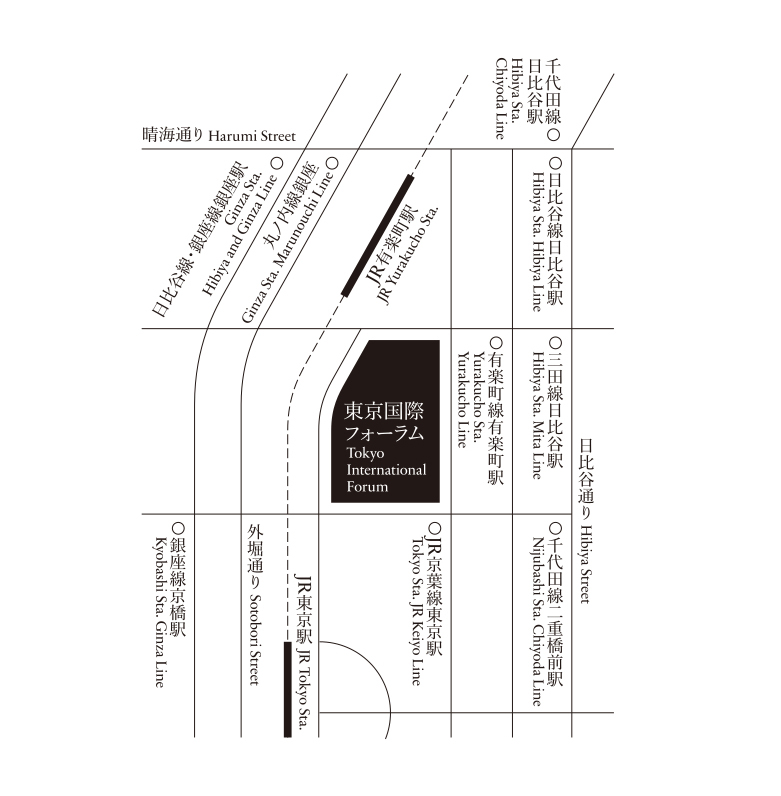
東京国際フォーラム ホールE
〒100-0005 東京都千代田区丸の内3-5-1
Tokyo International Forum, Hall E 5-1 Marunouchi 3-chome, Chiyoda-ku,Tokyo 100-0005 Japan
VIP First Choice (Invitation only)
12 March (Thu) 11:00-19:00
VIP (Invitation only)
12 March (Thu) 13:00-19:00
Public day
13 March (Fri) 11:00-19:00
14 March (Sat) 11:00-19:00
15 March (Sun) 11:00-17:00
S019
Yuki Katsura, Takako Araki, Saori Akutagawa(Madokoro), Kimiyo Mishima, Frank Stella
Tokyo International Forum, Hall E 5-1 Marunouchi 3-chome, Chiyoda-ku,Tokyo 100-0005 Japan

SEARCH